Rank #4 of 7 in Model Gateways & Routers

Access
 vs OpenRouter
 vs LiteLLM
 vs Vercel AI Gateway
 vs Cloudflare AI Gateway
 vs Requesty
 vs Kong AI Gateway
Showcase
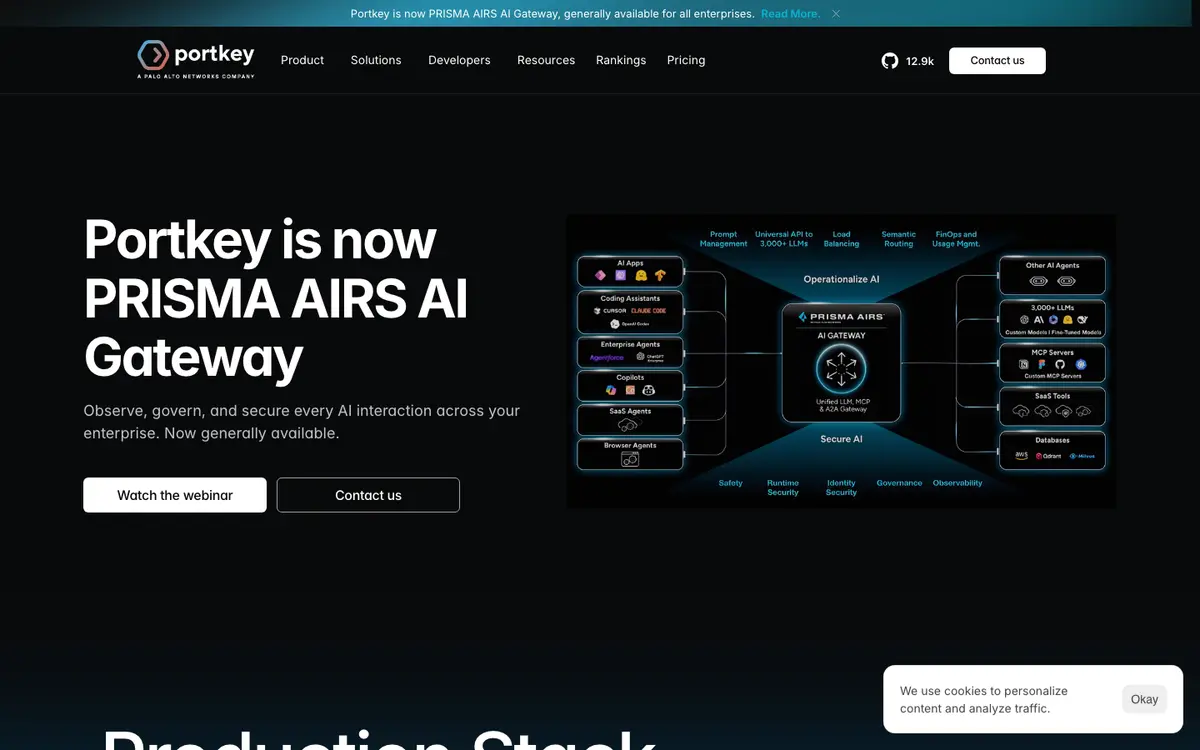
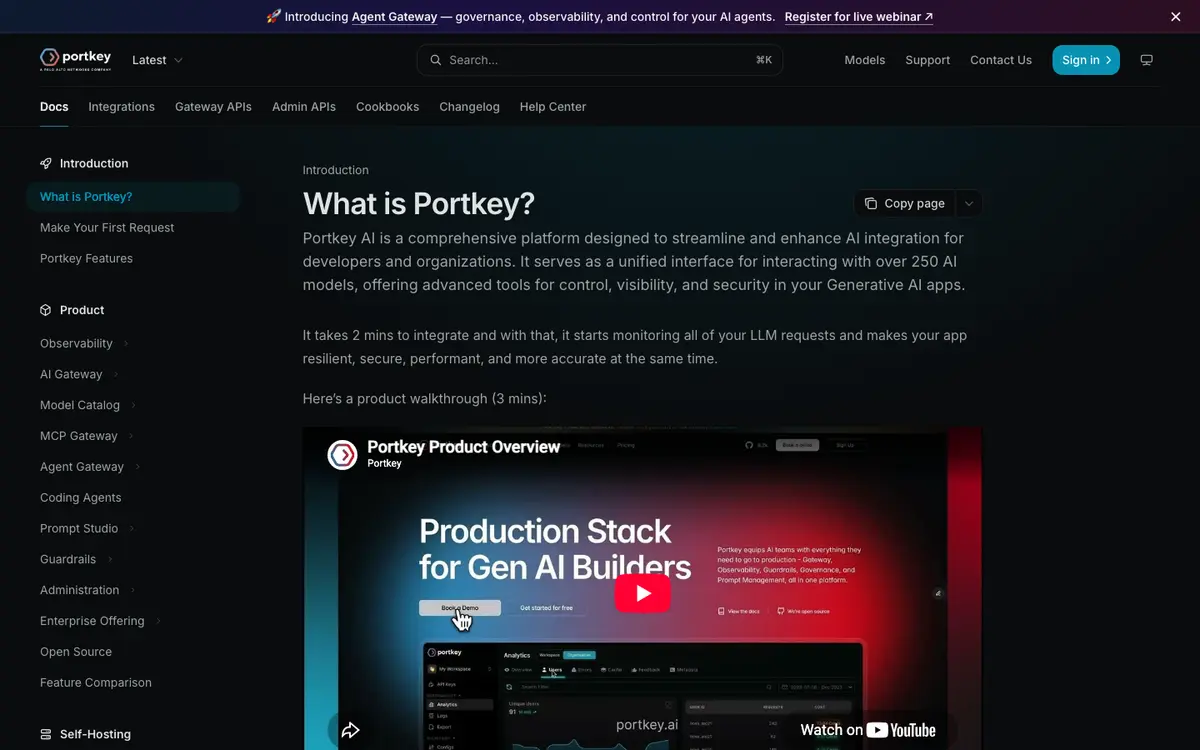
Verified integrations
No integration evidence found in our corpus for this product yet — that means none was found, never that it doesn’t integrate.
By theme — the product's score on each story themeBy theme
Agenticness — how well agents can access and operate the productAgenticnessevidence →
How well agents can access and operate the product
Automation depth — how much of the product can run unattendedAutomation depthevidence →
How much of the product can run unattended
Caching performance — stories about caching performance in this arenaCaching performanceevidence →
Stories about caching performance in this arena
Cost controls — stories about cost controls in this arenaCost controlsevidence →
Stories about cost controls in this arena
Key management — stories about key management in this arenaKey managementevidence →
Stories about key management in this arena
Observability — seeing what the system is doing — logs, metrics, traces, alertsObservabilityevidence →
Seeing what the system is doing — logs, metrics, traces, alerts
Openness — open source, data portability, and self-hosting storiesOpennessevidence →
Open source, data portability, and self-hosting stories
Privacy posture — data-handling and privacy storiesPrivacy postureevidence →
Data-handling and privacy stories
Routing resilience — stories about routing resilience in this arenaRouting resilienceevidence →
Stories about routing resilience in this arena
Streaming tools — stories about streaming tools in this arenaStreaming toolsevidence →
Stories about streaming tools in this arena
Unified api — stories about unified api in this arenaUnified apievidence →
Stories about unified api in this arena
Story verdicts — every judged story with its evidenceStory verdicts
What’s free: 4 free · 0 paid · 0 enterprise · 25 not stated in evidence
Follow the green: where the map greys out is where Portkey stops today. ✓ full · ~ partial · ! disputed · — none · n/a not applicable.
Agenticness — how well agents can access and operate the productAgenticness
How well agents can access and operate the product
API surface
Drive the product through a documented public API
✓8/10
unlocks → Webhooks · MCP server · Machine-readable spec · Versioning policy · API sandbox · Full data export
Subscribe to events via webhooks
—–
Build against official SDKs
~6/10
Issue scoped/least-privilege API credentials for an agent
~7/10
Connect an agent via an official MCP server
—0/10
Download a machine-readable API spec (OpenAPI or equivalent)
—0/10
Rely on versioned APIs with a documented deprecation policy
—0/10
Test against a sandbox environment without touching production data
—–
Explore an interactive API reference with runnable examples
~4/10
Docs for agents
Point an agent at llms.txt or agent-oriented docs
✓8/10
Agentic features
Delegate tasks to a built-in AI assistant inside the product
n/an/a
Operate the product with natural-language commands
—–
Plug MCP servers into this product so it can use their tools
~6/10
Get AI-generated insights and suggestions from my data inside the product
—0/10
Set up automations that run autonomously in the background
n/an/a
Automation depth — how much of the product can run unattendedAutomation depth
How much of the product can run unattended
Caching performance — stories about caching performance in this arenaCaching performance
Stories about caching performance in this arena
Cost controls — stories about cost controls in this arenaCost controls
Stories about cost controls in this arena
Key management — stories about key management in this arenaKey management
Stories about key management in this arena
Observability — seeing what the system is doing — logs, metrics, traces, alertsObservability
Seeing what the system is doing — logs, metrics, traces, alerts
Openness — open source, data portability, and self-hosting storiesOpenness
Open source, data portability, and self-hosting stories
Privacy posture — data-handling and privacy storiesPrivacy posture
Data-handling and privacy stories
Routing resilience — stories about routing resilience in this arenaRouting resilience
Stories about routing resilience in this arena
Configure automatic fallback to another model or provider when one fails
✓9/10
Load-balance traffic across providers, deployments, or keys by weight, latency, or cost
✓8/10
My agent can switch models mid-task by policy — cost, capability, or availability — through gateway routing rules
✓8/10
Smooth provider rate limits by spreading traffic across keys and queuing or throttling requests
✓8/10
Set automatic retry policies for transient provider errors
✓8/10
Streaming tools — stories about streaming tools in this arenaStreaming tools
Stories about streaming tools in this arena
Unified api — stories about unified api in this arenaUnified api
Stories about unified api in this arena
Sorted by importance (agentic first) (high → low) · 50/50 stories · click a row’s chevron for the rationale and evidence
Drive the product through a documented public API G Agent access | ai-native user | Agenticness — how well agents can access and operate the productAgenticness | 3 | full | 8/10 | Tprobed | |
Plug MCP servers into this product so it can use their tools G Agent access | ai-native user | Agenticness — how well agents can access and operate the productAgenticness | 3 | partial | 6/10 | Cclaimed | |
Connect an agent via an official MCP server G Agent access | ai-native user | Agenticness — how well agents can access and operate the productAgenticness | 3 | none | 0/10 | ||
Delegate tasks to a built-in AI assistant inside the product G Agentic features | ai-native user | Agenticness — how well agents can access and operate the productAgenticness | 3 | n/a | untested | none yet | |
Point an agent at llms.txt or agent-oriented docs G Agent access | ai-native user | Agenticness — how well agents can access and operate the productAgenticness | 2 | full | 8/10 | Tprobed | |
Issue scoped/least-privilege API credentials for an agent G Agent access | ai-native user | Agenticness — how well agents can access and operate the productAgenticness | 2 | partial | 7/10 | Cclaimed | |
Build against official SDKs G Agent access | ai-native user | Agenticness — how well agents can access and operate the productAgenticness | 2 | partial | 6/10 | Tprobed | |
Run the product headlessly / in CI for automation G Agent access | ai-native user | Agenticness — how well agents can access and operate the productAgenticness | 2 | partial | 5/10 | Cclaimed | |
Explore an interactive API reference with runnable examples G Api quality | ai-native user | Agenticness — how well agents can access and operate the productAgenticness | 2 | partial | 4/10 | Tprobed | |
Use an official CLI G Agent access | ai-native user | Agenticness — how well agents can access and operate the productAgenticness | 2 | partial | 3/10 | Cclaimed | |
Download a machine-readable API spec (OpenAPI or equivalent) G Api quality | ai-native user | Agenticness — how well agents can access and operate the productAgenticness | 2 | none | 0/10 | ||
Get AI-generated insights and suggestions from my data inside the product G Agentic features | ai-native user | Agenticness — how well agents can access and operate the productAgenticness | 2 | none | 0/10 | ||
Rely on versioned APIs with a documented deprecation policy G Api quality | ai-native user | Agenticness — how well agents can access and operate the productAgenticness | 2 | none | 0/10 | ||
Operate the product with natural-language commands G Agentic features | ai-native user | Agenticness — how well agents can access and operate the productAgenticness | 2 | none | untested | none yet | |
Set up automations that run autonomously in the background G Agentic features | ai-native user | Agenticness — how well agents can access and operate the productAgenticness | 2 | n/a | untested | none yet | |
Subscribe to events via webhooks G Agent access | ai-native user | Agenticness — how well agents can access and operate the productAgenticness | 2 | none | untested | none yet | |
Test against a sandbox environment without touching production data G Api quality | ai-native user | Agenticness — how well agents can access and operate the productAgenticness | 1 | none | untested | none yet | |
Call many model providers through one consistent API C One endpoint | developer | Unified api — stories about unified api in this arenaUnified api | 3 | full | 9/10 | Cclaimed | |
Configure automatic fallback to another model or provider when one fails C Fallbacks | platform engineer | Routing resilience — stories about routing resilience in this arenaRouting resilience | 3 | full | 9/10 | Cclaimed | |
Point existing OpenAI-compatible code at the gateway by changing only the base URL and key C Compatibility | developer | Unified api — stories about unified api in this arenaUnified api | 3 | full | 9/10 | Cclaimed | |
Set hard budgets and spend limits per key, team, or user C Budgets | platform engineer | Cost controls — stories about cost controls in this arenaCost controls | 3 | full | 9/10 | Cclaimed | |
Mint gateway-managed keys for teams and apps without exposing raw provider keys C Virtual keys | platform engineer | Key management — stories about key management in this arenaKey management | 3 | full | 8/10 | Cclaimed | |
My agent can switch models mid-task by policy — cost, capability, or availability — through gateway routing rules C Policy routing | ai-native user | Routing resilience — stories about routing resilience in this arenaRouting resilience | 3 | full | 8/10 | Cclaimed | |
Track spend per model, key, team, or user across all providers in one place C Spend tracking | platform engineer | Cost controls — stories about cost controls in this arenaCost controls | 3 | fullfree | 7/10 | Cclaimed | |
Define rules that trigger actions automatically on events G | ai-native user | Automation depth — how much of the product can run unattendedAutomation depth | 3 | partial | 6/10 | Cclaimed | |
Self-host the core product G | ai-native user | Openness — open source, data portability, and self-hosting storiesOpenness | 3 | partialfree | 6/10 | Cclaimed | |
Inspect logged requests and responses with latency, token counts, and cost attached C Logs | platform engineer | Observability — seeing what the system is doing — logs, metrics, traces, alertsObservability | 3 | partialfree | 5/10 | Cclaimed | |
Make tool and function calls across different providers with a consistent schema C Tool calling | developer | Streaming tools — stories about streaming tools in this arenaStreaming tools | 3 | partial | 5/10 | Cclaimed | |
Export all of my data in open formats and leave G | ai-native user | Openness — open source, data portability, and self-hosting storiesOpenness | 3 | none | 0/10 | ||
Provision gateways, keys, and budgets programmatically through an admin API C Programmatic admin | ai-native user | Key management — stories about key management in this arenaKey management | 3 | none | 0/10 | ||
Stream token-by-token responses through the gateway from any provider C Streaming | developer | Streaming tools — stories about streaming tools in this arenaStreaming tools | 3 | none | 0/10 | ||
Prevent my data from being used to train AI models G | ai-native user | Privacy posture — data-handling and privacy storiesPrivacy posture | 3 | none | untested | none yet | |
Cache responses at the gateway to cut cost and latency on repeated requests C Caching | developer | Caching performance — stories about caching performance in this arenaCaching performance | 2 | full | 9/10 | Cclaimed | |
Bring my own provider API keys and have the gateway use them for my traffic G Byok | developer | Key management — stories about key management in this arenaKey management | 2 | full | 8/10 | Cclaimed | |
Give an autonomous agent its own key with budget and rate guardrails so it cannot run away on spend C Agent guardrails | ai-native user | Cost controls — stories about cost controls in this arenaCost controls | 2 | full | 8/10 | Cclaimed | |
Load-balance traffic across providers, deployments, or keys by weight, latency, or cost C Load balancing | platform engineer | Routing resilience — stories about routing resilience in this arenaRouting resilience | 2 | full | 8/10 | Cclaimed | |
Set automatic retry policies for transient provider errors C Retries | platform engineer | Routing resilience — stories about routing resilience in this arenaRouting resilience | 2 | full | 8/10 | Cclaimed | |
Smooth provider rate limits by spreading traffic across keys and queuing or throttling requests C Rate limits | platform engineer | Routing resilience — stories about routing resilience in this arenaRouting resilience | 2 | full | 8/10 | Cclaimed | |
Browse or query a catalog of available models with pricing and context-window metadata G Catalog | developer | Unified api — stories about unified api in this arenaUnified api | 2 | partial | 5/10 | Cclaimed | |
Do everything through the API that I can do in the UI G | ai-native user | Openness — open source, data portability, and self-hosting storiesOpenness | 2 | partial | 5/10 | Tprobed | |
Read the product's source under an open license G | ai-native user | Openness — open source, data portability, and self-hosting storiesOpenness | 2 | partialfree | 5/10 | Cclaimed | |
Run traffic through gateway infrastructure that adds minimal latency overhead to provider calls C Latency | platform engineer | Caching performance — stories about caching performance in this arenaCaching performance | 2 | partial | 4/10 | Cclaimed | |
Choose where my data is stored (region/residency) G | ai-native user | Privacy posture — data-handling and privacy storiesPrivacy posture | 2 | none | untested | none yet | |
Control data retention and deletion G | ai-native user | Privacy posture — data-handling and privacy storiesPrivacy posture | 2 | none | untested | none yet | |
Opt out of telemetry and usage tracking G | ai-native user | Privacy posture — data-handling and privacy storiesPrivacy posture | 2 | none | untested | none yet | |
Perform bulk operations across many items at once G | ai-native user | Automation depth — how much of the product can run unattendedAutomation depth | 2 | none | untested | none yet | |
Schedule recurring jobs or workflows G | ai-native user | Automation depth — how much of the product can run unattendedAutomation depth | 2 | n/a | untested | none yet | |
Version, review, and roll back my automations G | ai-native user | Automation depth — how much of the product can run unattendedAutomation depth | 1 | none | 0/10 | ||
Export gateway logs and traces to my own observability stack G Integrations | developer | Observability — seeing what the system is doing — logs, metrics, traces, alertsObservability | 1 | none | untested | none yet | |
Request structured JSON-schema outputs across providers C Tool calling | developer | Streaming tools — stories about streaming tools in this arenaStreaming tools | 1 | none | untested | none yet |
Opportunities — the stories that would move this product's scores, from its own judged verdictsOpportunitiestop 8 of 32 stories with headroom
What would move Portkey’s scores — derived from its own judged verdicts, biggest headroom first. Each line quotes what the judge found missing; shipping it (or evidencing it publicly) is the fix.
Agenticness — how well agents can access and operate the productConnect an agent via an official MCP server
nonemoves agent-readyimpact 45
Missing: any documentation of Portkey hosting/serving an MCP endpoint, MCP server setup instructions, or third-party confirmation of agents connecting via Portkey's MCP server.
Openness — open source, data portability, and self-hosting storiesExport all of my data in open formats and leave
nonemoves PA Scoreimpact 30
Portkey's docs cover logging, gateway configuration, and self-hosting the open-source gateway, but there is no mention of exporting stored logs/configs/data in open formats or facilitating a full data export for migration away from the platform.
Privacy posture — data-handling and privacy storiesPrevent my data from being used to train AI models
nonemoves PA Scoreimpact 30
Evidence pack covers gateway routing, caching, retries, logging, budgeting, etc., but contains no mention of a data-training opt-out, zero-retention policy, or any privacy control preventing use of data for AI model training.
Key management — stories about key management in this arenaProvision gateways, keys, and budgets programmatically through an admin API
nonemoves PA Scoreimpact 30
Evidence shows budget/rate-limit and key management as dashboard-configurable features (docs-13, docs-25, docs-35, docs-38) but never describes a programmatic Admin API for provisioning gateways, keys, or budgets; the only API reference documented is the inference API (docs-15, docs-16, docs-36), and probes for an OpenAPI/admin API spec returned 404 (portkey-probe-3, portkey-probe-2).
Streaming tools — stories about streaming tools in this arenaStream token-by-token responses through the gateway from any provider
nonemoves PA Scoreimpact 30
The evidence describes Portkey's gateway, fallbacks, retries, load balancing, caching, and OpenAI-compatible base URL integration, but none of the provided docs mention streaming or token-by-token response support.
Agenticness — how well agents can access and operate the productGet AI-generated insights and suggestions from my data inside the product
nonemoves Built-in AIimpact 30
Missing: any AI-generated insight/summary feature, anomaly detection or recommendation engine over logs/usage data, in-product AI assistant surfacing suggestions.
Agenticness — how well agents can access and operate the productOperate the product with natural-language commands
nonemoves Built-in AIimpact 30
Portkey's evidence describes an API/SDK-based AI gateway, dashboard configs, logs, and MCP server connectivity for tools/data sources, but nothing shows an interface where a user issues natural-language commands to operate Portkey itself (e.g., a chat-based admin/control plane).
Agenticness — how well agents can access and operate the productSubscribe to events via webhooks
nonemoves agent-readyimpact 30
No evidence in the pack mentions webhooks or event subscriptions of any kind; Portkey's docs cover gateway routing, caching, retries, budgets, and logs but nothing about outbound webhook notifications for events.
Showing the top 8 of 32 — every none/partial verdict in the story verdicts table is headroom.
Think a verdict is wrong? Every verdicts-table row has a Flag link — see the methodology.
Coverage map — which docs area, API section, or community source covers which judged storiesCoverage map3 surfaces · 29 covered stories
Where the cited evidence behind each covered verdict came from — the same citations the verdicts table shows, no extra judging.
docs29 stories
- Point an agent at llms.txt or agent-oriented docs
- Run the product headlessly / in CI for automation
- Plug MCP servers into this product so it can use their tools
- Use an official CLI
- Drive the product through a documented public API
- Issue scoped/least-privilege API credentials for an agent
- Build against official SDKs
- Explore an interactive API reference with runnable examples
- Define rules that trigger actions automatically on events
- Cache responses at the gateway to cut cost and latency on repeated requests
- Run traffic through gateway infrastructure that adds minimal latency overhead to provider calls
- Give an autonomous agent its own key with budget and rate guardrails so it cannot run away on spend
- Set hard budgets and spend limits per key, team, or user
- Track spend per model, key, team, or user across all providers in one place
- Bring my own provider API keys and have the gateway use them for my traffic
- Mint gateway-managed keys for teams and apps without exposing raw provider keys
- Inspect logged requests and responses with latency, token counts, and cost attached
- Do everything through the API that I can do in the UI
- Read the product's source under an open license
- Self-host the core product
- Configure automatic fallback to another model or provider when one fails
- Load-balance traffic across providers, deployments, or keys by weight, latency, or cost
- My agent can switch models mid-task by policy — cost, capability, or availability — through gateway routing rules
- Smooth provider rate limits by spreading traffic across keys and queuing or throttling requests
- Set automatic retry policies for transient provider errors
- Make tool and function calls across different providers with a consistent schema
- Browse or query a catalog of available models with pricing and context-window metadata
- Point existing OpenAI-compatible code at the gateway by changing only the base URL and key
- Call many model providers through one consistent API
OpenAPI spec4 stories
Claims vs evidence — vendor claims reconciled against independent verdictsClaims vs evidence
1 of 16 testable claims verified · 0 contradicted → integrity 6/100
33 distinct capability claims found in Portkey’s own claimed-docs/GitHub materials, reconciled against our judge’s independent verdicts.
1
Verified
15
Unverified
0
Contradicted
13
Undersold
Verified (1)
“Offers a REST API with a documented base URL for all requests”
Drive the product through a documented public APIfullproof ↗
Unverified (29)
“Integrates in about 2 minutes and starts monitoring all LLM requests”
Inspect logged requests and responses with latency, token counts, and cost attachedpartialproof ↗
“Can be run locally as an open-source AI gateway via a single npx command”
“Automatically falls back to next provider/model in a prioritized list if primary fails”
Configure automatic fallback to another model or provider when one failsfullproof ↗
“Logs can be filtered by Config ID to see all requests using that config”
Inspect logged requests and responses with latency, token counts, and cost attachedpartialproof ↗
“Automatically retries failed LLM requests with exponential backoff”
Set automatic retry policies for transient provider errorsfullproof ↗
“Can use provider-supplied retry-after headers instead of exponential backoff for retries”
Set automatic retry policies for transient provider errorsfullproof ↗
“Distributes traffic across multiple LLMs to avoid bottlenecks on one provider”
Load-balance traffic across providers, deployments, or keys by weight, latency, or costfullproof ↗
“Caches LLM responses to serve repeated requests up to 20x faster and cheaper”
Cache responses at the gateway to cut cost and latency on repeated requestsfullproof ↗
“One Portkey API key gives access to multiple providers and models”
Call many model providers through one consistent APIfullproof ↗
“One Portkey API key gives access to multiple providers and models”
Mint gateway-managed keys for teams and apps without exposing raw provider keysfullproof ↗
“Provides a single pane for centralized governance, discovery, and usage control of all AI providers/models”
Track spend per model, key, team, or user across all providers in one placefullproof ↗
“Logs section shows a chronological list of all requests processed through Portkey”
Inspect logged requests and responses with latency, token counts, and cost attachedpartialproof ↗
“Budget and rate limits can be configured on API keys to manage spend and usage”
Set hard budgets and spend limits per key, team, or userfullproof ↗
“Existing OpenAI SDK setups can integrate Portkey by just changing the base URL and adding headers”
Point existing OpenAI-compatible code at the gateway by changing only the base URL and keyfullproof ↗
“Can connect to remote MCP servers to use external tools and data sources”
Plug MCP servers into this product so it can use their toolspartialproof ↗
“Unified interface for interacting with over 250 AI models with control, visibility, and security tools”
Call many model providers through one consistent APIfullproof ↗
“Fallback triggers by default on any non-2xx status code, customizable via on_status_codes”
Configure automatic fallback to another model or provider when one failsfullproof ↗
“Supports gradual migration by testing new models on a small percentage of traffic before full rollout”
Load-balance traffic across providers, deployments, or keys by weight, latency, or costfullproof ↗
“Semantic caching matches requests with similar meaning via cosine similarity, not just exact text”
Cache responses at the gateway to cut cost and latency on repeated requestsfullproof ↗
“Can address models by provider-slug/model-name after adding a provider”
Browse or query a catalog of available models with pricing and context-window metadatapartialproof ↗
“Budget limits automatically stop further usage once spending or token thresholds are reached”
Set hard budgets and spend limits per key, team, or userfullproof ↗
“Can canary test new models in production”
Load-balance traffic across providers, deployments, or keys by weight, latency, or costfullproof ↗
“Can route requests to privately hosted or local models via custom host URLs”
Bring my own provider API keys and have the gateway use them for my trafficfullproof ↗
“Provider credentials are stored securely and never exposed in code”
Bring my own provider API keys and have the gateway use them for my trafficfullproof ↗
“Fine-grained budgets, rate limits, and model allow-lists at org and workspace level”
Set hard budgets and spend limits per key, team, or userfullproof ↗
“Manual feedback can be added to logs for later analysis and filtering”
Inspect logged requests and responses with latency, token counts, and cost attachedpartialproof ↗
“Budget limits can be set to reset weekly on a schedule”
Set hard budgets and spend limits per key, team, or userfullproof ↗
“Open-sourced AI gateway can be run locally with a single command”
“Can set hourly, daily, or per-minute rate limits on requests or tokens”
Smooth provider rate limits by spreading traffic across keys and queuing or throttling requestsfullproof ↗
Undersold (13)
Point an agent at llms.txt or agent-oriented docsfullproof ↗
Run the product headlessly / in CI for automationpartialproof ↗
Issue scoped/least-privilege API credentials for an agentpartialproof ↗
Explore an interactive API reference with runnable examplespartialproof ↗
Define rules that trigger actions automatically on eventspartialproof ↗
Run traffic through gateway infrastructure that adds minimal latency overhead to provider callspartialproof ↗
Give an autonomous agent its own key with budget and rate guardrails so it cannot run away on spendfullproof ↗
Do everything through the API that I can do in the UIpartialproof ↗
Read the product's source under an open licensepartialproof ↗
My agent can switch models mid-task by policy — cost, capability, or availability — through gateway routing rulesfullproof ↗
Make tool and function calls across different providers with a consistent schemapartialproof ↗
Claims outside our story set (4)
Real capability claims found in Portkey’s own materials, but no story in this arena’s taxonomy covers them yet — that’s feedback on the taxonomy, not a mark against the product.
“Each log has a unique shareable URL”
source ↗“Sends notifications to configured recipients when usage reaches a threshold”
source ↗“Supports per-strategy circuit breaker configuration and failure handling”
source ↗“Quick integration makes apps resilient, secure, performant, and more accurate”
source ↗
Pricing signals
- $49per month (entry plan)entry planProduction plan entry-paid tier, includes 100k recorded logs per month with overage feessource ↗as of 2026-09-07
- freegateway feefree tierFree Forever tier includes 10k recorded logs per monthsource ↗as of 2026-09-07
Extracted verbatim from the vendor’s own pricing page — hover a figure for the exact quote.
Business model
Free developer tier with capped monthly requests; paid plans are monthly subscriptions that scale by request volume, with custom enterprise pricing.
pricing ↗Score trend
How this product’s scores have moved as evidence and verdicts are re-derived — a point per change, not per day.
Flag
⚑ Flag a verdictThink a verdict is wrong? Opens a prefilled GitHub issue — or use the ⚑ next to any verdict above.
For agents
Agent surface uptime llms.txt 100% (30d, checked every 6h since Sep 8 '26)